
Audi
Voice Assistant
2019
Prototyping a Future Vision for Audi’s 2025 Voice Assistant
User research
Concept
Branding
UX/UI
Interaction
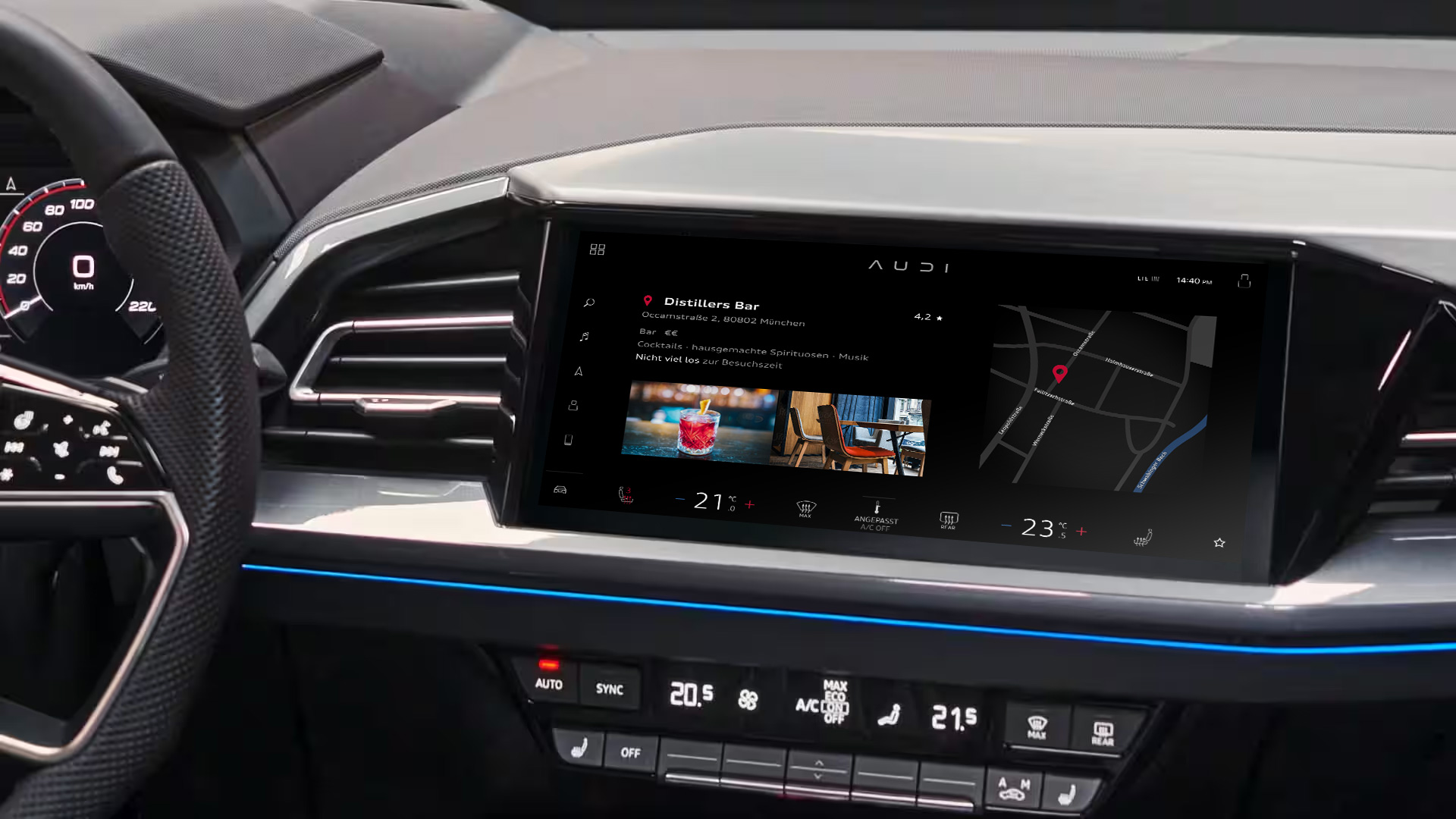
Audi
Voice Assistant. Germany
Credits
Creative Direction Katja Wenger
Strategy / UX Design Isabel Hillenbrand
Head of UX/UI Design Naiara Odriozola
Client Managment / Junior Designer Paul Krizsan
Agency think moto
Innovation is built into every Audi and technology is Audi's passion and drive. They asked think moto to define the vision of a future where technology holistically enhances the customer experience in their cars. In 2018, think moto supported Audi in the fundamental strategy process for developing a brand-specific voice assistant.
But it didn't stop here. One year later, we had an extended brief. As part of a pre-development project, we would prototype a future vision for Audi’s 2025 voice assistant POIs (Points of Interest).
The final result of the collective work was a true-to-detail prototype, which was piloted at an internal Audi innovation event in 2019 and its user experience will hopefully be implemented in the next series production in the near future.
The user experience
Experience vision
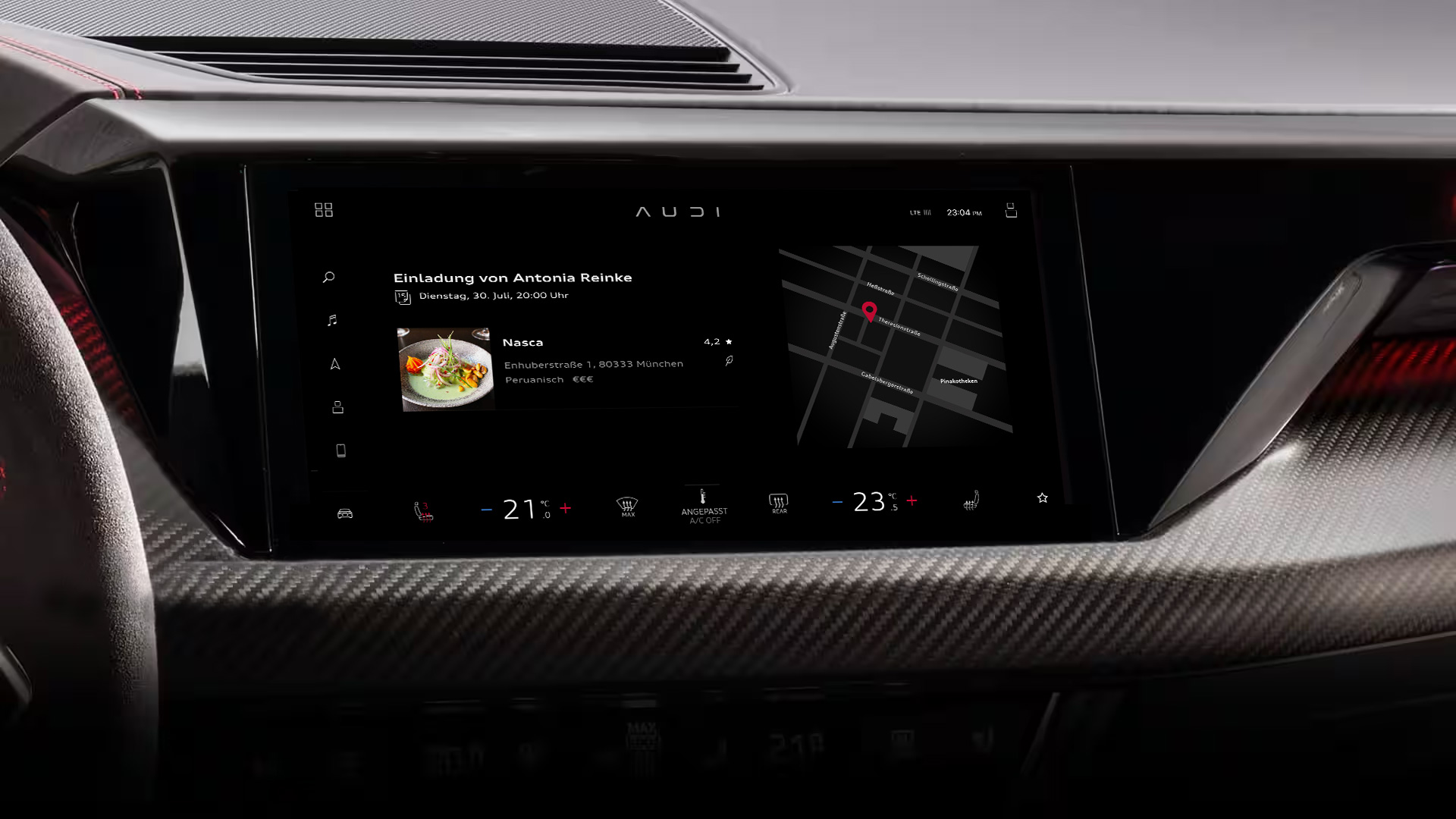
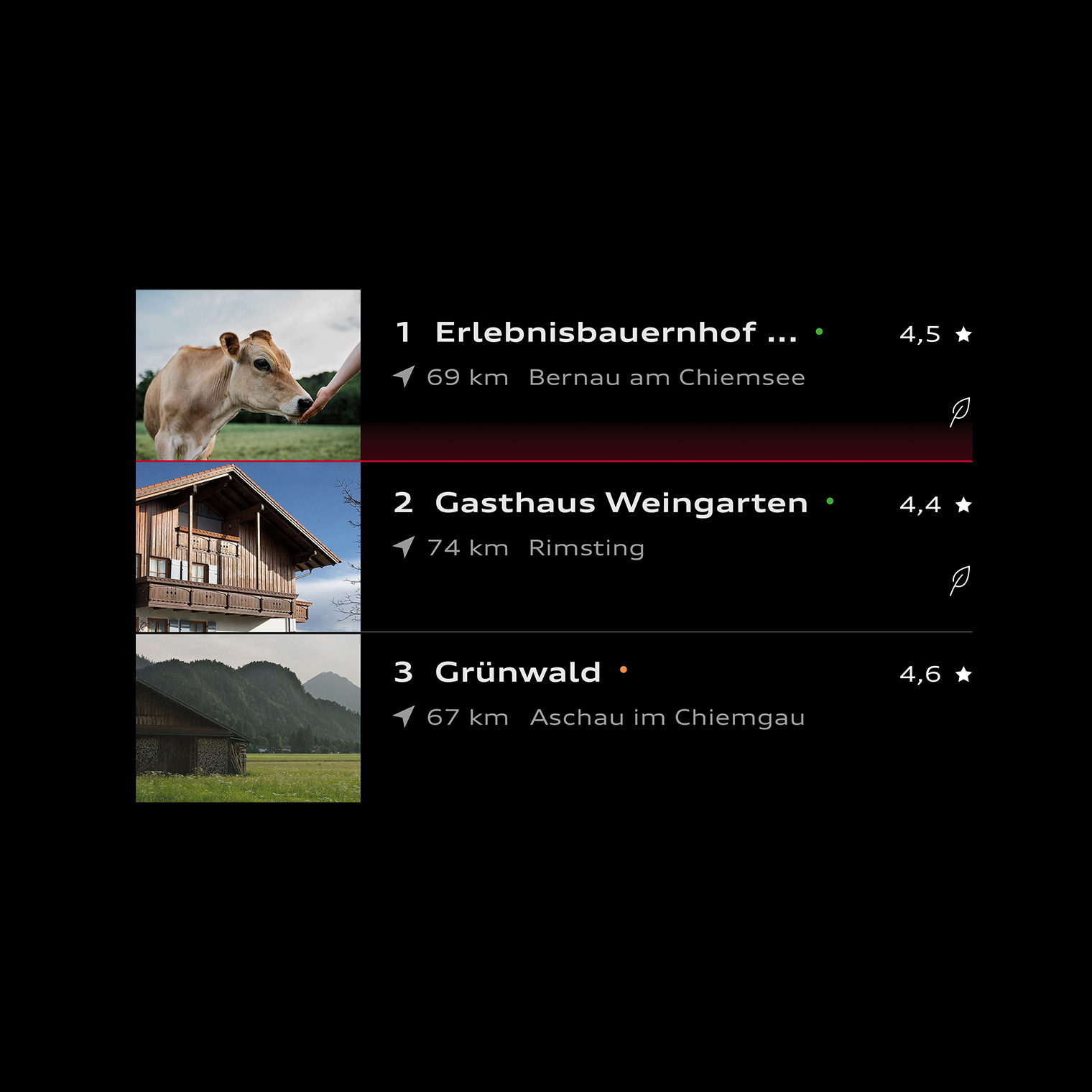
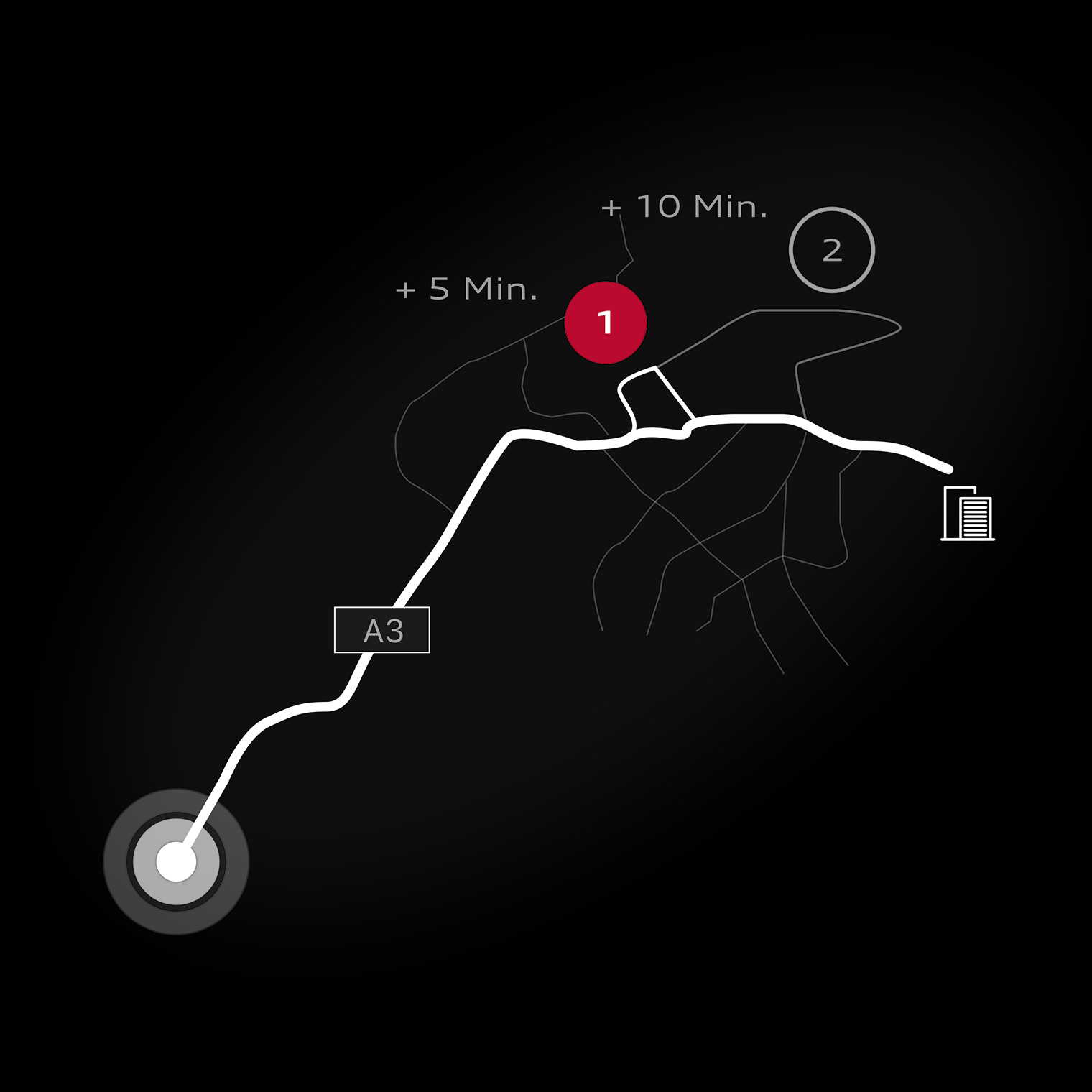
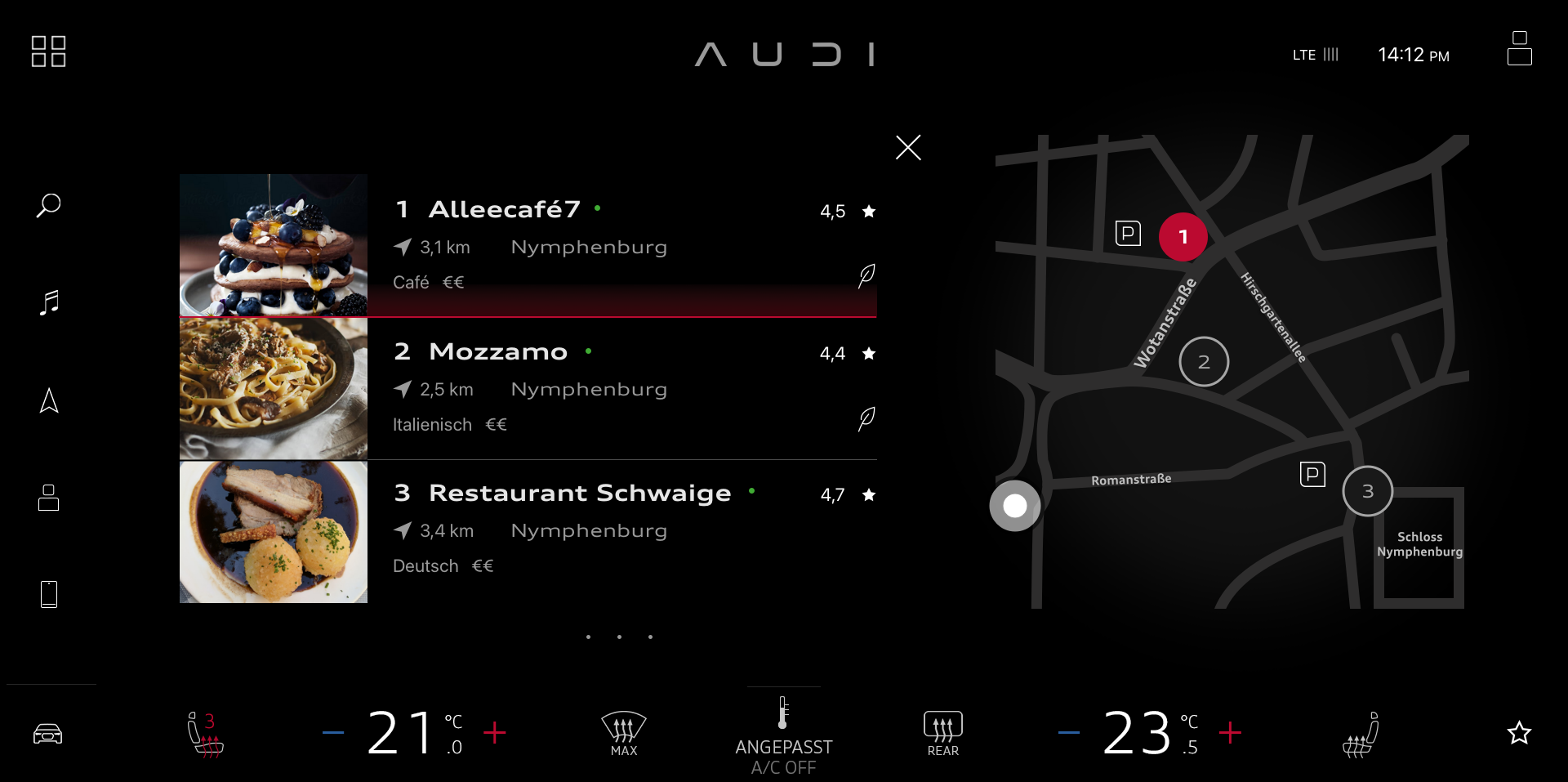
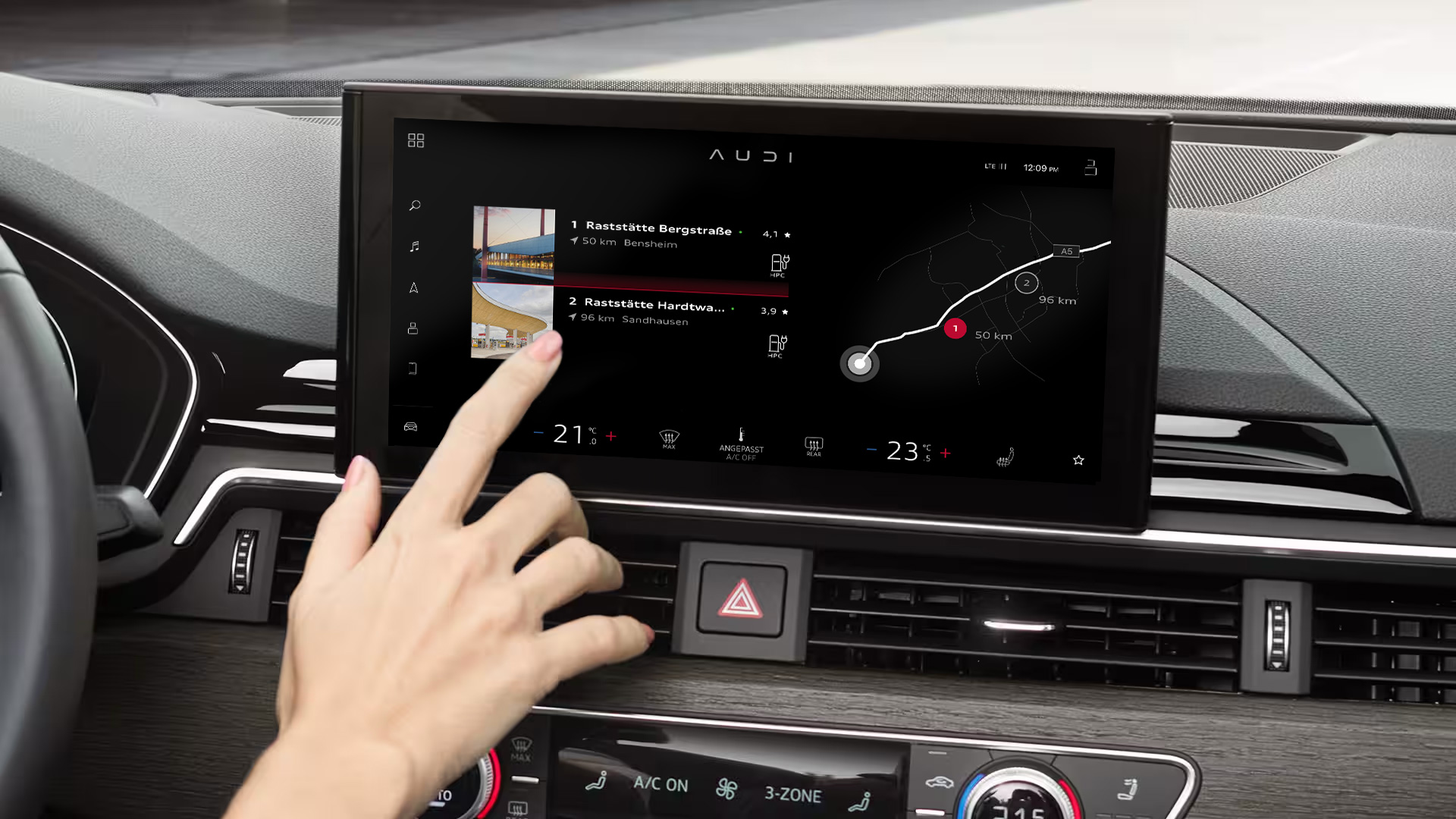
We wanted to recreate the experience of a concierge interaction when searching for POls in Audi's cars. The aim was to develop a human-like operating concept with user-optimized presentation of results, that – in contrast to the current simple listing by distance – contains personalized and situation-dependent POl suggestions.
This is made possible by Al algorithms enriched with meaningful decision trees by Audi's dev team. The experience should also be branded, meaning that it should correspond to the defined behavioural attributes of the Audi Assistant – reliable, sympathetic, authentic, empathetic and confident.
Our team’s first task was to develop a cohesive and tech-savvy vision and strategy to which the Audi team could align. We began a two month process of research, brainstorming and problem solving. On this time, we delivered the user personas, use cases, user flows, human-like voice assistant dialogues and wireframes that would define the rest of our work.
During the ride, interactions will primarily take place via voice in the future, so we developed dialogs, sounds, and screen content for various use cases. These scenarios ranged from querying a user's basic preferences to active POI suggestions by the voice assistant to joint POI searches with another person.
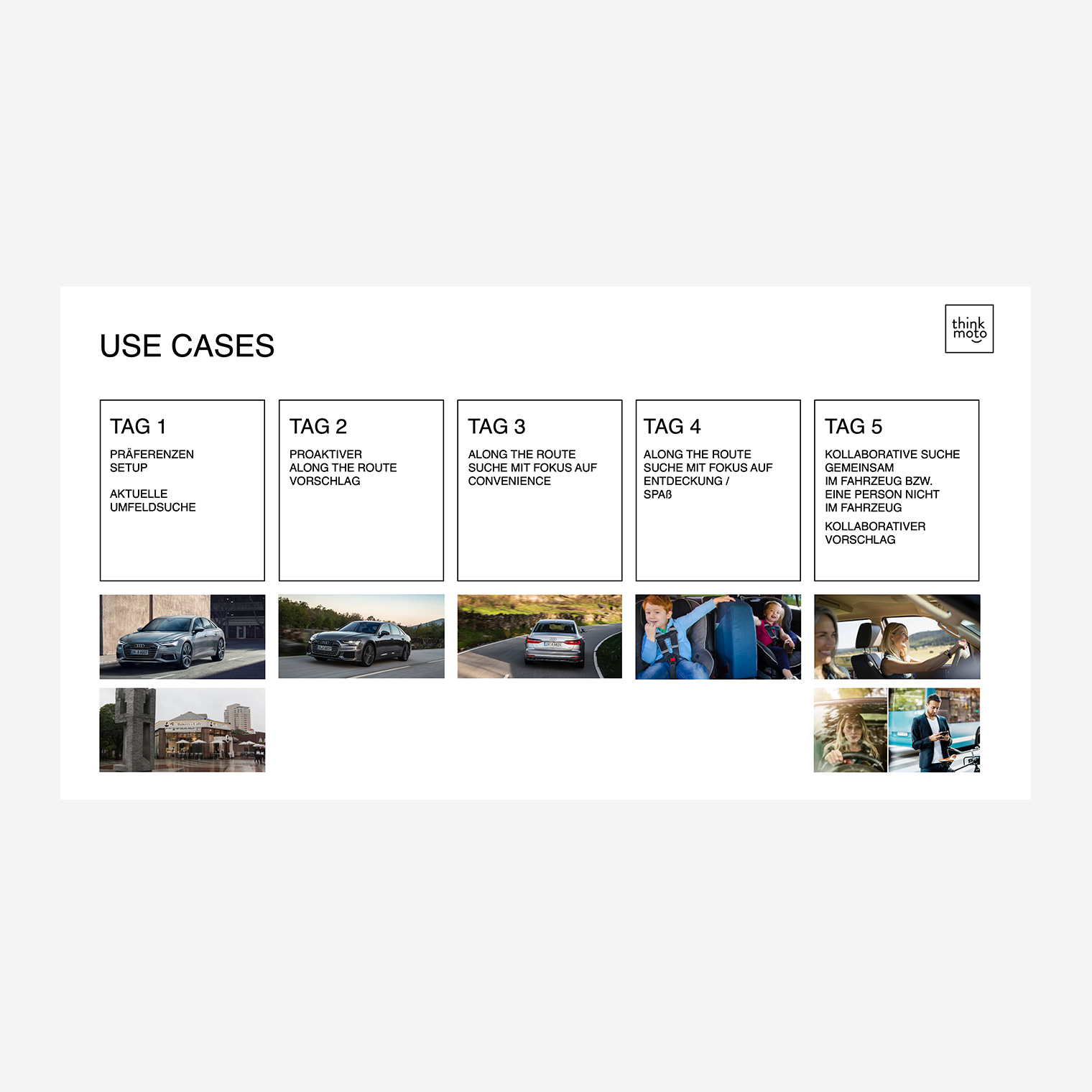
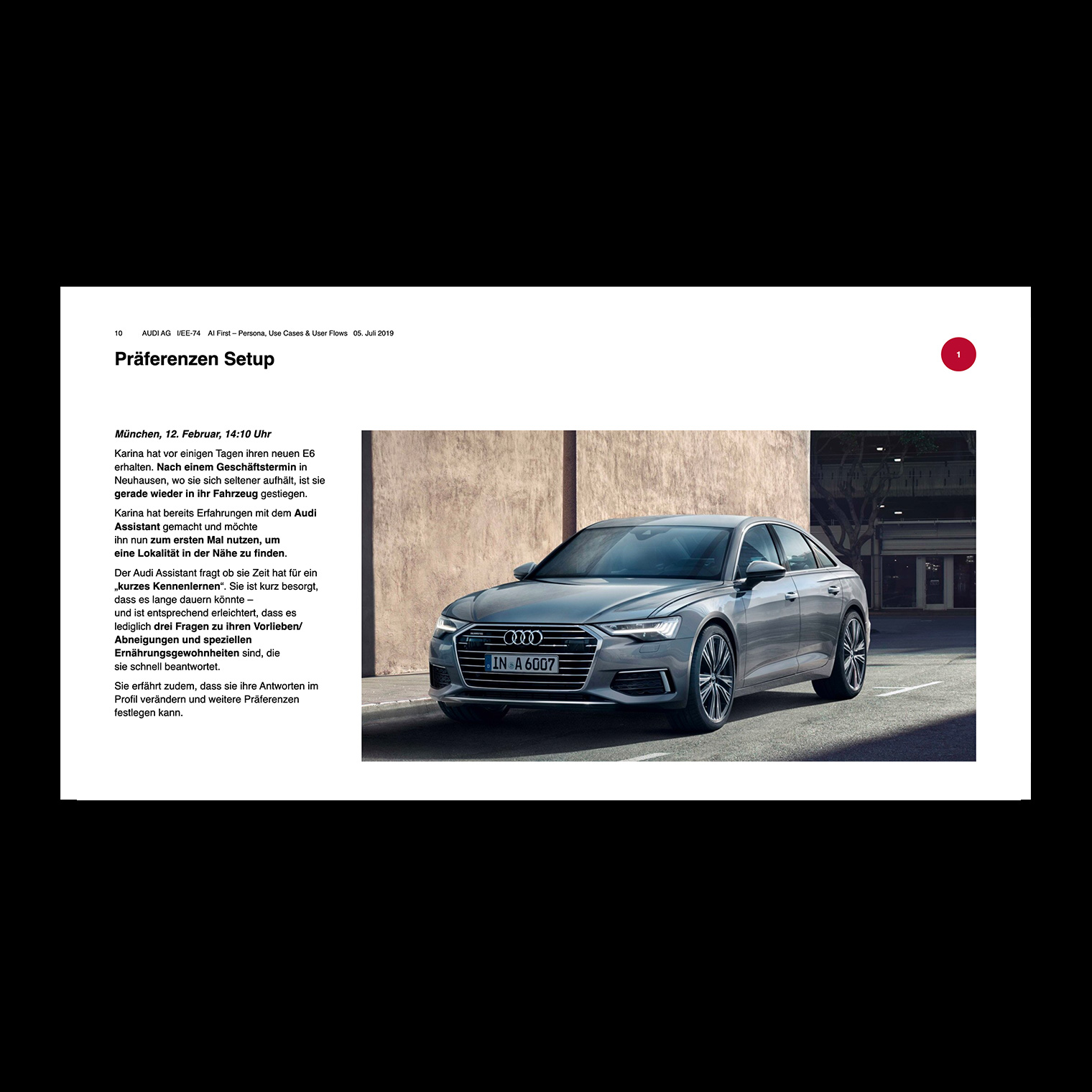
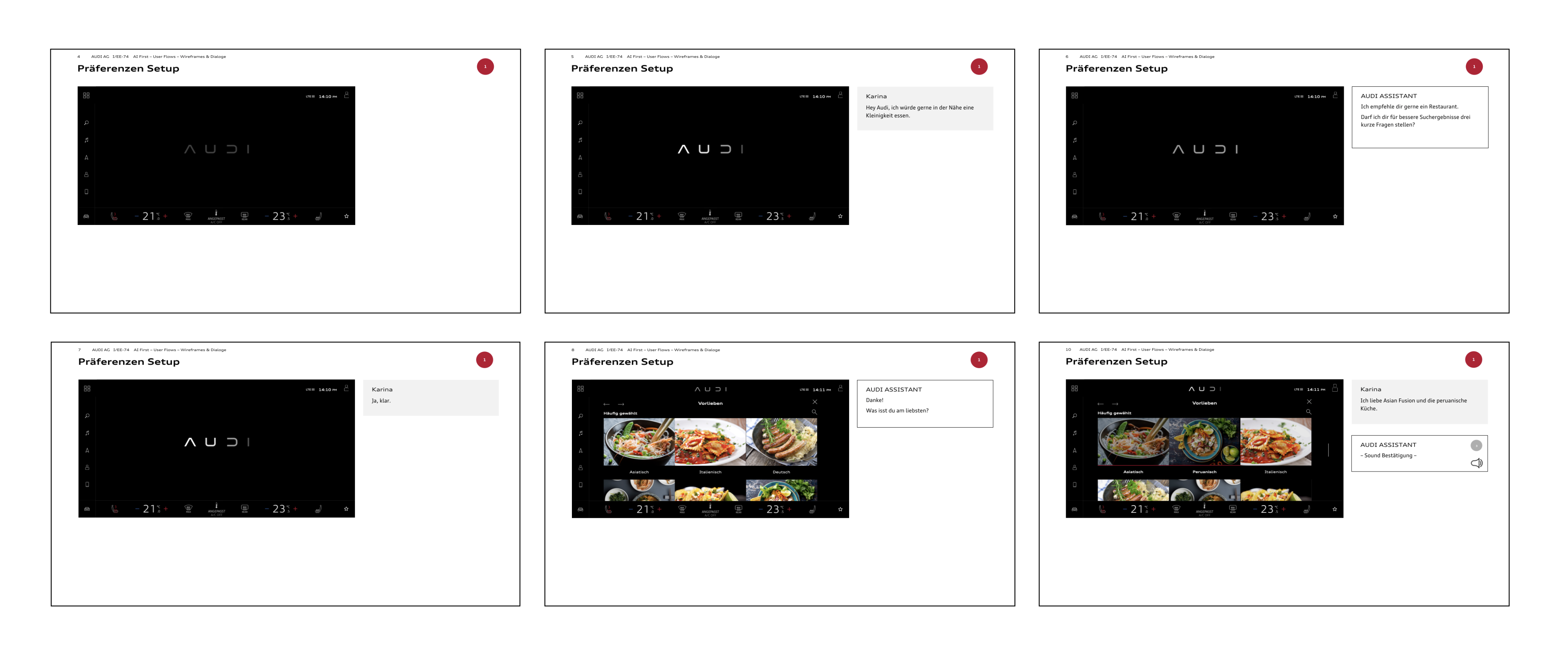
The user experience
Bringing the vision to life
Once we had identified effective solutions to the challenges, we drafted several user flows for the different case studies. We designed intricately detailed wireframes, dialogues, animations and prototypes, which helped ensure all parties were aligned on the plan. Together with Audi, we established a strategy to work as partners, sharing design and development, openly exchanging ideas and feedback.
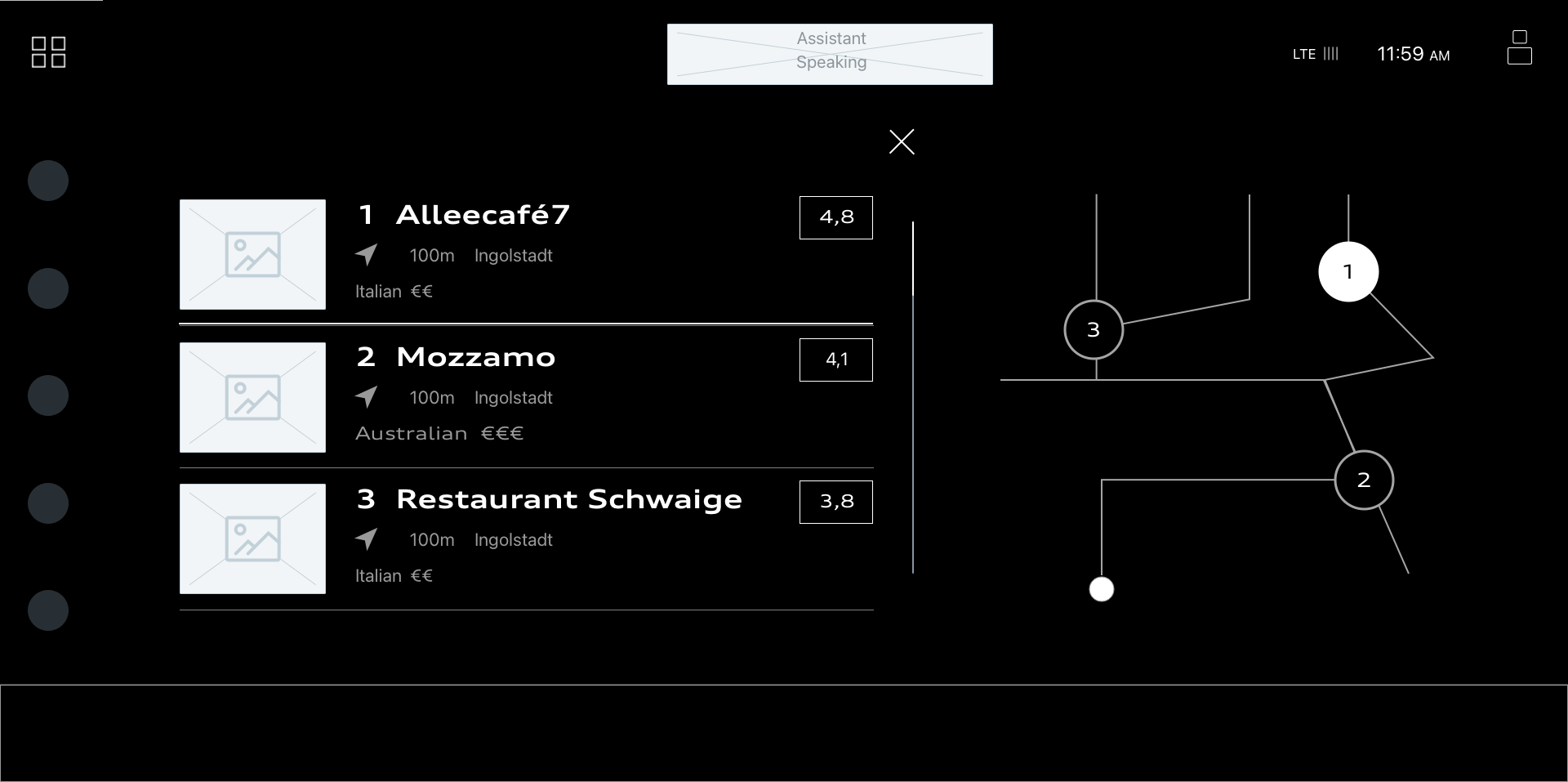
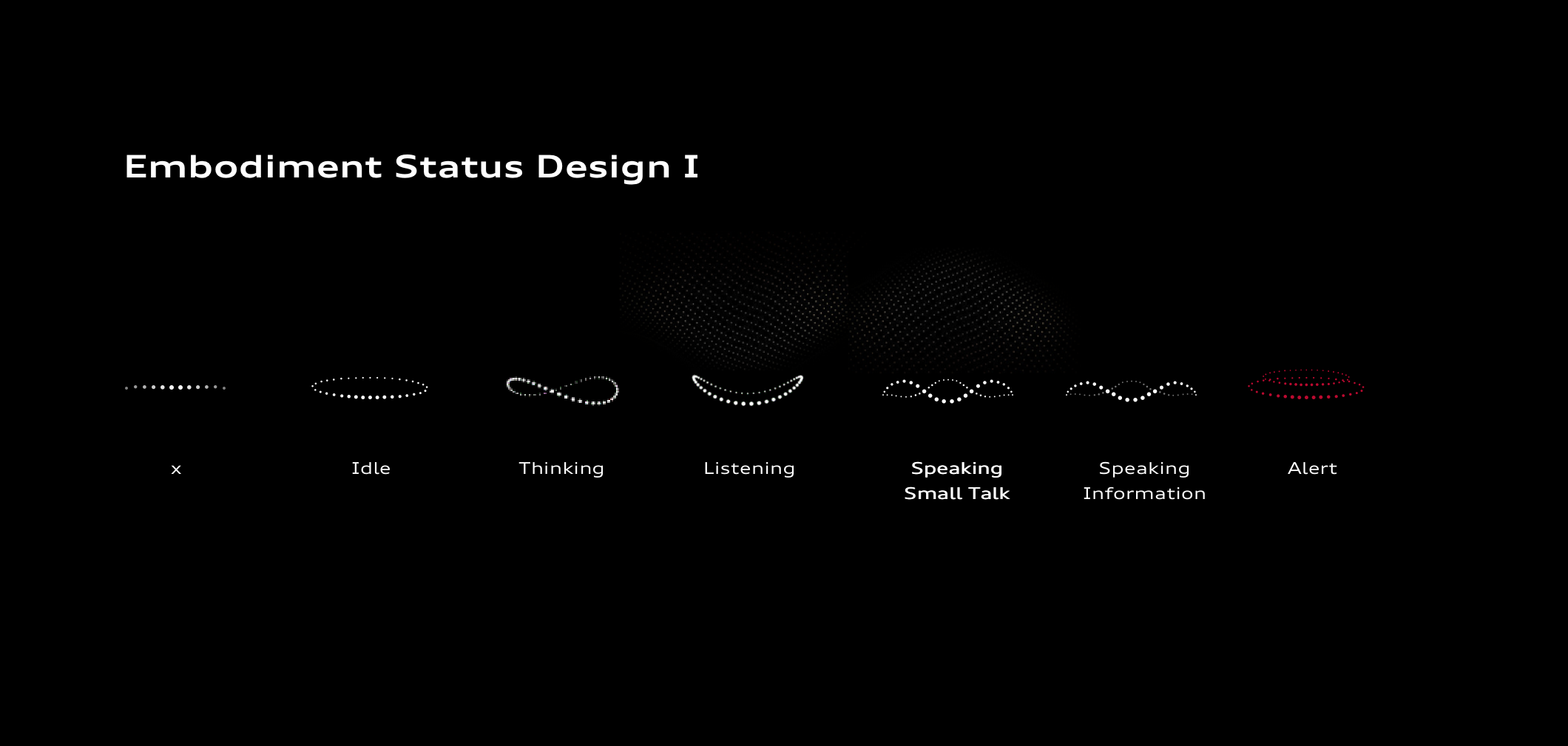
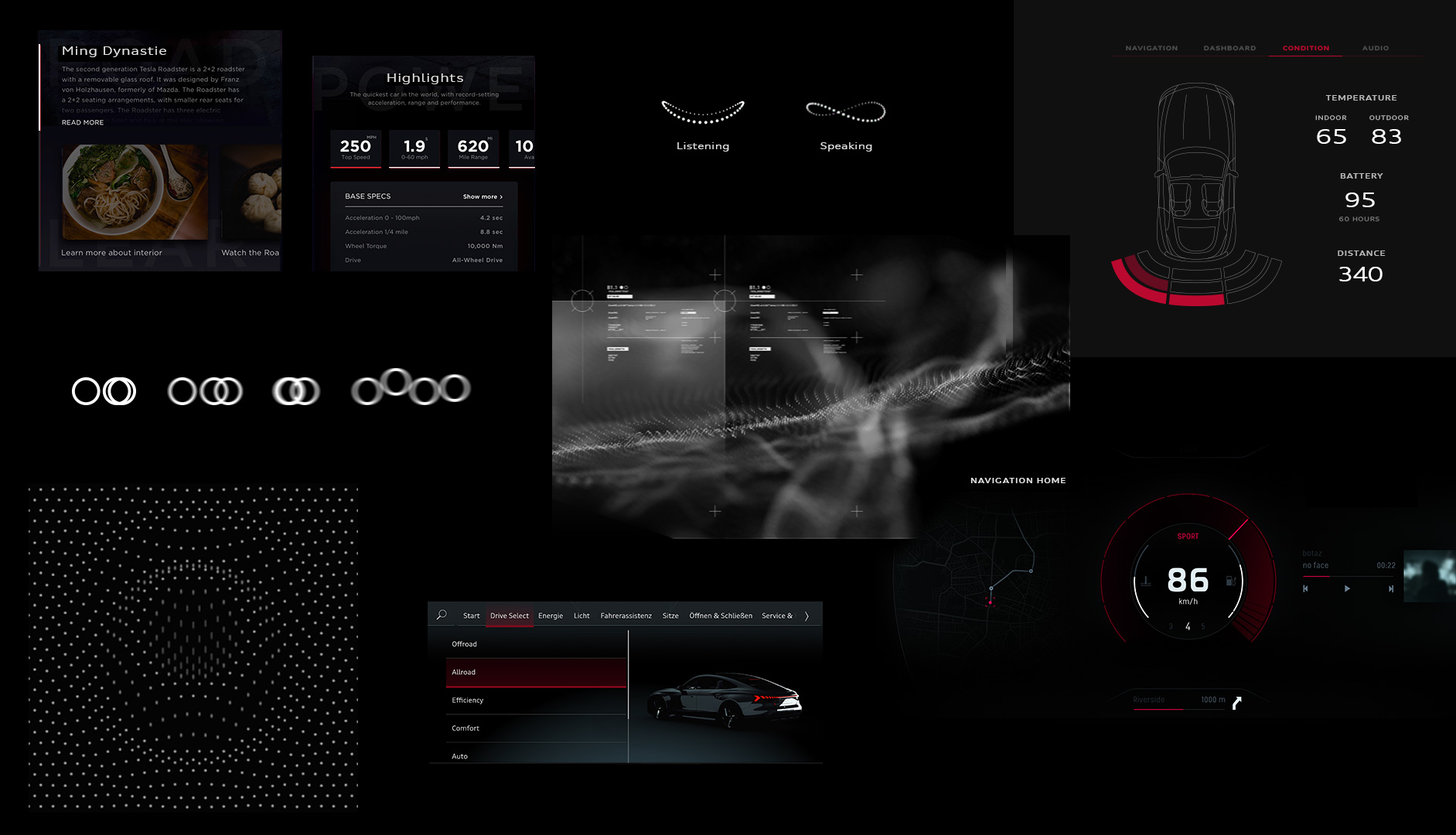
The voice assistant embodiment & moodboard
Strong, independent and unmistakably Audi
The look and feel should show strong, independent design that is recognisable and unmistakably Audi. For that, we went for a high-quality, elegant look, through reduced flat design for usability.
The design as well as the UX is user centered. This comes across for example through clear separation of different areas and and states. To fit it's purpose, it should provide a calming effect.
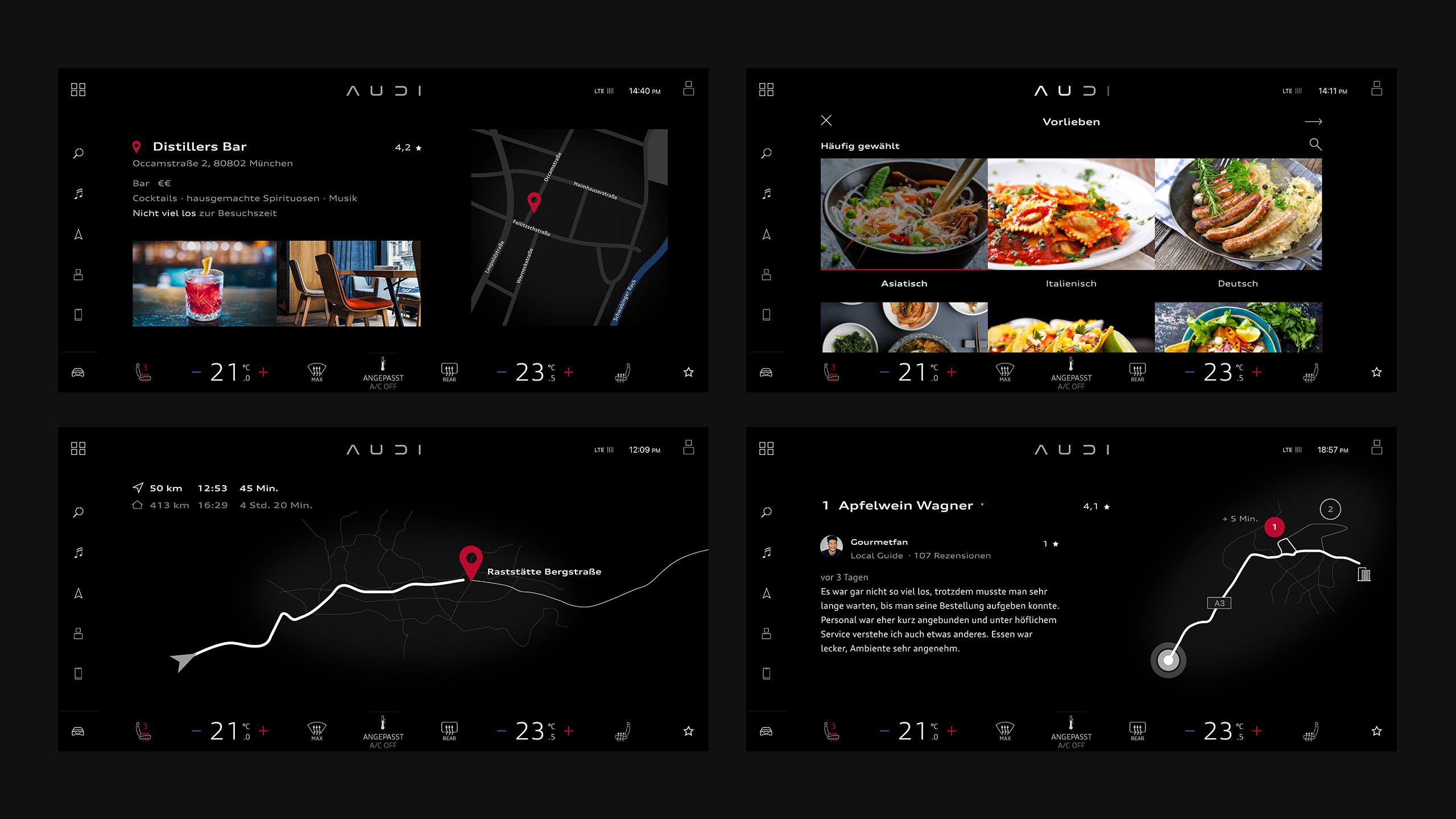
The interface design
Balance between brand, usability & expectations in the future
After conducting market research to understand the current competition, key trends, and customer needs, we embarked on a collaborative strategy process with Audi’s team. With their input, we then developed a unique interface that reflects the assistants's personality: authentic, empathic and confident.
The main challenge for the UI design was to keep a balance between brand, usability and future factor (user expectation/learning effect). The UI should express cultivated elegance with a love for detail, high-quality and reduced design.
Let's collaborate
hello@naiaraodriozola.com
Copyright © 2026
Development
Made with Semplice
by Naiara Odriozola